“When I was a child, I talked like a child, I thought like a child, I reasoned like a child. When I became a man, I put the ways of childhood behind me.” 1Corinthians 13:11.
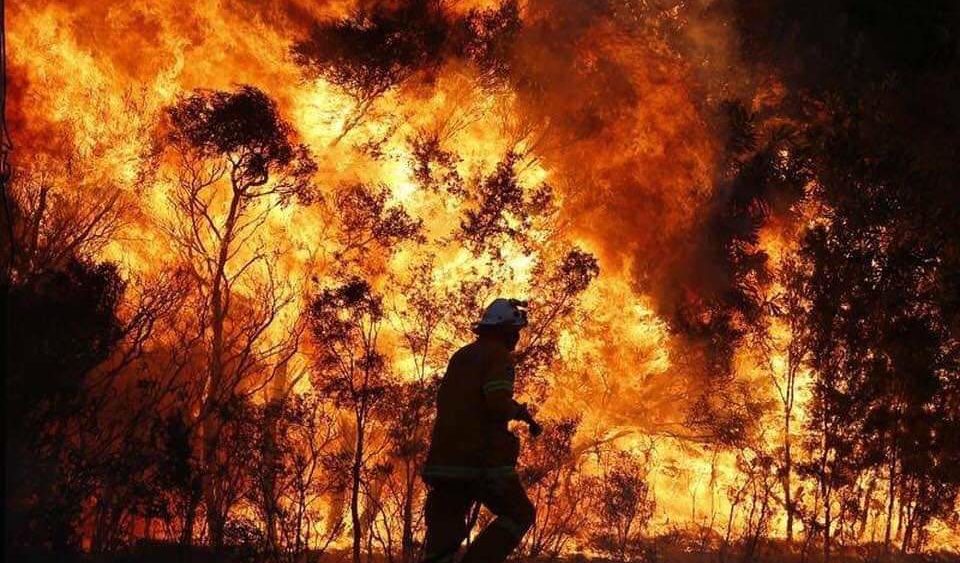
Die-by-fire prayer makes over 60% of church prayers in most Pentecostal and Aladura churches. They are so popular because most of the participants struggle with something. That struggle creates a sense of frustration, anger and easy provocation that would see them want a quick-fix solution. And because this kind of prayer keeps people awake and vibrant–unlike prayer for holiness, brotherly love or a readiness for heaven–it is the most popular topic in night vigils where “warfare” or “breakthrough” prayers are rife.
The chief target in die-by-fire prayer is a supposed “enemy”. This type of prayer is becoming increasingly
accepted as a New Testament model prayer, although it instigates a hateful, vengeful, and unforgiving mindset. Largely African in nature, this new wave raises great concern about the Great Commission by the way it shoots down revivals, evangelism, good neighborliness and God’s overall redemptive purpose for humanity.
However, this by no means denies the fact that some people just must die. So long as our wonderful patriarchs are no longer around, no more can we kick against death as a fact of life. Besides, some wonderful believers’ livelihood comes from making caskets or digging graves. Pharaoh needed to die for Moses to return to Egypt; so was Herod for Jesus to return to Nazareth. In Nigeria, Yar’Adua needed to die for Jonathan to become President!
Yes, death is a fact of life, but demonizing people as “enemies” in order to pray-kill them is gross abuse of the ideals of the Pentecostal power which, according to Jesus, was given to help take the gospel to the ends of the earth (Acts 1:8). But today, too many people are so preoccupied with pray-killing whole communities that they may never win one soul for Jesus in their entire lifetime–sadly not even theirs!
The following are twenty-one reasons why die-by-fire prayer doesn’t square perfectly with your New Testament mandate.
- The challenge of your existence. If God answered the prayer of people who wanted your forefathers to die by fire, would you be here today–or ever?
- Possibly worse. Almost always, people who wish others’ death can be proven to be guiltier of worse evils. The men who accused a woman of adultery, nailed criminals beside Jesus, or stoned Stephen to death were all worse sinners. You may not be guilty of your enemy’s kind of sin (like those elders weren’t adulterers), but you are never innocent!
- Funny definition. Lazy people who believe in die by fire prayer have very funny impression of who their enemy is, including those they suspect, misunderstand or disagree with for various reasons. Why would you want to pray somebody dead because he doesn’t agree with your dubious character, or has greater foresight than you do?
- Possibly at risk too. Within the same prayer hall, it’s possible that I’m your enemy just as you are mine–which implies that we’ll be shooting at each other at every die-by-fire prayer topic! All thanks to God that he isn’t as foolish, or we’d be having trailers of corpses of “enemies” who went to pray their own “enemies” dead.
- Unhappy people. You can’t kill and be happy, unless you have no part in Christ. That’s why God wouldn’t approve David to build a temple or accept Israel’s prayer when their hands were full of blood.
- Insincerity. We are not always sincere in this prayer point. I can be furious to declare fire because I suspect you as my enemy–until I realise I am my own witch. King David decreed four-time penalty against the enemy of Uriah’s household, only to realize he was the one (2Samuel 12:7). Unfortunately, that decree was never withdrawn even after he repented!
- The challenge of misinformation. It’s common to hate people because of misinformation. Jesus Christ and Stephen were murdered through mob psychology. Don’t be surprised to realise that the person you pray-killed yesterday was innocent?
- Pray-killing not praiseworthy. Don’t expect people to clap for you because you can kill very well using prayer. But you can become a celebrity as you win those enemies to Christ. People only dread you if you are notorious over people’s death.
- Not an automatic solution. Your enemy’s death isn’t an automatic license to fulfilling your dream. What if, for example, the enemy you successfully pray-killed died with your success keys in their stomach!
- Soul’s immortality. Death affects only the body, while the soul moves over into eternity. The implication is that should your “witch” mother die today so you can marry, her condemned soul will stare at you from hell for ever and ever, when marriage would have long been forgotten.
- Possibility of better relationships tomorrow. Friendship and enmity are interchangeable, that is, one can become the other anytime. Killing today because of yesterday is too early, because there’s an unknown tomorrow ahead. Or imagine what the New Testament would look like, if the apostles had pray-killed Paul. That enemy of yours today may become your in-law tomorrow.
- Two pulpits in the Bible. There are two preaching points in the Bible – one is at Sinai by Moses, the other is at Calvary by Jesus Christ. Moses says, “Eye for eye, tooth for tooth”; but Jesus says, “Vengeance is God’s prerogative.” For that reason, avoid importing some vengeful, Sinaitic Psalms when standing on the authority of Calvary.
- The danger of ‘over-judging’. Justice demands that people be rewarded or punished in proportion to their services or offences, no matter the attachments. There’s no justice when you demand someone’s life–who hasn’t demanded yours. Suspicion or evidence that someone is standing on the way of your prosperity or marriage isn’t enough justification for demanding that they die.
- Double potency. Any prayer that can take a life, can as well transform that life. In fact, it is easier to transform an enemy than to kill him by prayer, because “there will be more joy in heaven over one sinner who repents” (Luke 15: 7).
- Platform for showcasing God’s glory. We marvel at Israelites’ crossing of the Red Sea, or the Hebrew children’s surviving of a furnace. Those events happened because the persons involved chose to face their pains. You can also grow above merely rehearsing those stories by burying die-by-fire prayer as a favorite escapist mentality.
- The danger of judgment. Jesus’ word, “Blessed are the merciful, for they shall obtain mercy” can also be restated as, “Cursed are the judgmental, for they shall obtain judgment.” Are you ready?
- Some pending scores. Taking laws into your hands is a poor alternative that outruns God. It is written, “When a man’s ways please the Lord, he makes even his enemies to be at peace with him” (Proverb 16:7). Don’t be too fanatical to pray until you get right with God?
- The Church’s reason for being. What exactly is the Church living for, and how many die-by-fire warriors know it? Ignorance of this is as bad as giving a pistol to a sucking baby. Some people you may want dead today will best decorate your crown in heaven, if you can win them.
- Killing forbidden. God forbids murder (Exodus 20:13). In other words, you mustn’t kill–whether by witchcraft, cultism, or in the guise of prayer. It’s always the intent first.
- God has no pleasure in the death of the wicked (Ezekiel 18: 23; 33:11), meaning that God is more at peace when you seek your enemy’s life for salvation than for death (Cf. 1Kings 3:5-13; Proverb 24:17-18).
- Purely African. Different cultures add to or subtract from biblical Christianity. Die by fire prayer is purely African–because Africans are so vengeful that quite often, even at pinnacles of Church leadership, that beast can still be seen to be alive, awake and kicking. Biblical Christianity demands “the mind of Christ”, whatever the cost (Philippians 2:5).
Ultimately, your best approach toward your enemy, is Jesus’ formula and example, namely, “Father, forgive them, for they know not what they do” (Luke 23: 34). Jesus’ example doesn’t suggest weakness. Rather, it gives a better platform for stating your case before God and allowing him to do justice in your favour. It gives you an edge, first as one who is innocent and then as an intercessor, though in pains. That position is very attractive to God, who spares no time to intervene.
Meanwhile, Kingdom-minded believers should be-mourn such present predicament of the Church, in which prayer is being used to decide who lives or dies. Obviously, the Church may have left her job of redemption and entered into that of “area boys,” who take pride in terrorizing the community at the expense of human redemption. Therefore, the earlier believers are able to recover themselves from this corporate madness, the better for their own souls and the faster the fulfilment of the Great Commission.
Are you a pray-killer, or a soul winner?
Rev. J. L Ushie
 GLOBAL SOULS RESCUE TEAM